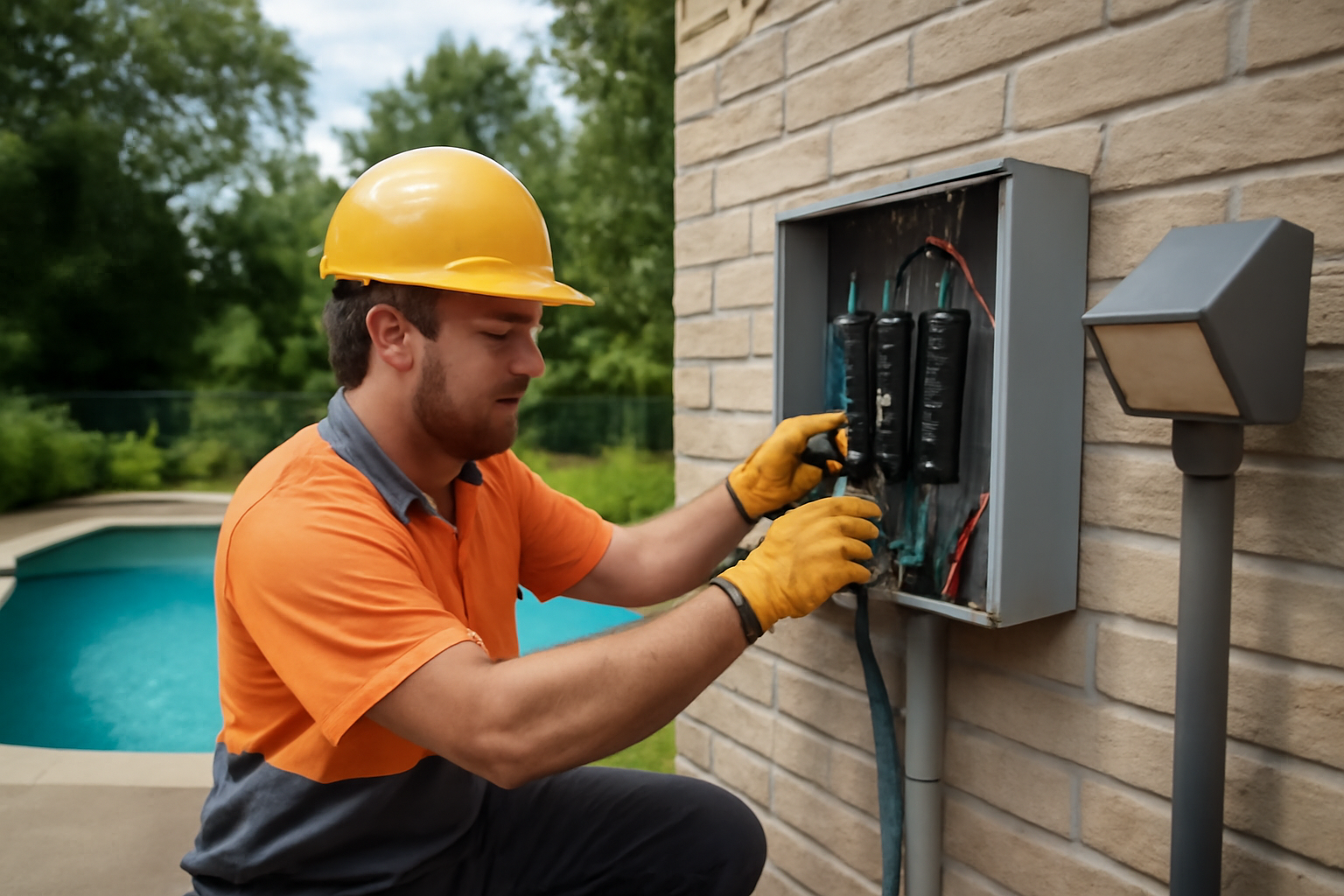
Summer Pool Wiring & Outdoor Lighting Safety in Nashville
Summer in Middle Tennessee means late sunsets, backyard gatherings, and—around Nashville—plenty of pool parties from Bellevue to Donelson. But outdoor lighting and pool power add real electrical risk if wiring, grounding/bonding, and GFCI protection aren’t done exactly right.
This practical, Nashville-specific guide focuses on how to plan, inspect, and upgrade your summer outdoor lighting and pool wiring so it’s safer, code-aligned, and built for our humid climate and stormy seasons.
---
Why Nashville Summers Are Hard on Outdoor Electrical Systems
Nashville’s outdoor electrical setups get punished by:
- High humidity + heat (corrosion in connectors, moisture intrusion in boxes)
- Pop-up thunderstorms and wind (water entry, physical damage to fixtures)
- Clay-heavy soil in many areas (shift/frost-heave can stress conduit and underground cable)
- Frequent outdoor use (cords, speakers, landscape lights, pumps running longer)
In neighborhoods like 12 South, East Nashville, Sylvan Park, Green Hills, Hermitage, and Antioch, we often see a mix of older homes (older wiring methods) and newer outdoor amenities (pools, patios, outdoor kitchens) that were added over time—sometimes without a cohesive electrical plan.
---
The #1 Safety Rule: Pool Power Is Not “Just Another Outdoor Circuit”
Pool wiring has special requirements because electricity and water are a dangerous combination. The most common “near-miss” situations we see in Nashville backyards include:
- A pump plugged into a non-GFCI receptacle
- A light circuit without proper bonding
- Underground splices buried without the correct rated connectors
- DIY landscape lighting transformers fed from overloaded circuits
- Extension cords used as permanent wiring to reach a shed, gazebo, or pool equipment
If you have a pool (above-ground or in-ground), treat the electrical portion like a safety system—not a convenience upgrade.
---
Quick Self-Check: Are You at Higher Risk?
Walk your yard and pool area and look for these red flags:
- No “TEST/RESET” buttons on outlets near the pool, patio, or exterior walls (missing GFCI)
- Pool pump cord runs across the ground or under mulch
- Outdoor lights flicker when the pump turns on
- Breaker trips after rain or when landscape lights turn on
- Pool equipment pad has no labeled disconnect in sight
- Metal fence, handrail, ladder, or diving board supports feel “tingly” (stop using immediately)
- Rusty/loose outdoor junction boxes, missing covers, cracked fixtures
If any of these show up, schedule a professional evaluation before your next big summer gathering.
---
How to Plan Safe Outdoor Lighting in Nashville (Step-by-Step)
Outdoor lighting is a huge quality-of-life upgrade in Nashville—especially for patios and yards with mature trees. Here’s a practical planning process that avoids common mistakes.
Step 1: Map the lighting zones you actually use
Separate your plan into zones so you don’t end up with one switch that controls everything.
Common Nashville backyard zones:
- Entry + driveway (security + curb appeal)
- Walkways + steps (trip prevention)
- Patio / deck (dining and entertaining)
- Fence line / dark corners (security)
- Landscape features (trees, garden beds)
- Pool perimeter (visibility and safety)
Tip: In areas like Bellevue and parts of Brentwood-adjacent South Nashville, larger lots benefit from zoning and timers to avoid lighting the entire yard all night.
Step 2: Choose the right lighting type for the job
For most homes, the best mix is:
- Line-voltage (120V) fixtures for entries, floodlights, and hardwired sconces
- Low-voltage (12V) landscape lighting for paths, trees, and accents
Why low-voltage is popular in Nashville:
- Safer around damp soil and irrigation
- Easier to expand as your landscaping evolves
- Great for layered lighting without harsh glare
Step 3: Use weather-rated materials (don’t trust “indoor” leftovers)
Outdoor electrical needs correct ratings:
- Wet-location fixtures where rain hits directly
- Damp-location fixtures under a roofed patio
- In-use (bubble) covers on exterior receptacles
- Outdoor-rated boxes, gaskets, and fittings
In Nashville’s humidity, cheap connectors fail early. Quality materials reduce corrosion and nuisance tripping.
Step 4: Control it smart (without creating a reliability mess)
You can add convenience while keeping it robust:
- Photocell + timer for landscape zones
- Smart switches for patio lighting
- Motion sensors for side yards and back gates
Actionable tip: Put security lights on a separate circuit or control than entertaining lights, so a nuisance trip doesn’t leave you in the dark.
---
Pool Wiring Essentials: What Must Be Done Right
Pool electrical work isn’t just “best practice”—it’s code-driven, safety-critical work. Here are the fundamentals homeowners should understand.
GFCI protection: non-negotiable
GFCI protection is designed to shut power off quickly when current leaks—exactly the scenario that can happen around water.
Typical pool-adjacent items that often require GFCI protection include:
- Pool pump motor circuits
- Receptacles near the pool
- Pool light circuits (depending on equipment and setup)
- Outdoor receptacles used for cleaning equipment
Practical test: Use the TEST button monthly during swim season. If it won’t trip and reset properly, replace it.
Bonding vs. grounding: the most misunderstood topic
Homeowners often say “the pool is grounded,” but pools also require bonding—a critical safety network that equalizes voltage between metal parts.
Bonding commonly includes:
- Pool pump motor
- Metal piping and equipment
- Pool ladder/handrails
- Rebar or conductive pool shell components (in many installations)
- Metal fences or nearby metal structures (depending on placement)
If bonding is missing or incomplete, you can get stray voltage potential differences—one of the reasons tingling sensations happen.
Disconnects and labeling: serviceability + safety
Pool equipment needs a safe way to shut off power for service. A properly located, labeled disconnect improves safety for:
- Filter/pump maintenance
- Saltwater system service
- Heater servicing
- Winterization / startup
If your pool pad is a “mystery panel” with unlabeled breakers, that’s a fix worth making before something fails on a Saturday night.
---
Underground Wiring: What Nashville Homeowners Should Know
Many outdoor lighting and pool systems require underground wiring. Nashville yards create specific challenges—tree roots, shifting soil, and irrigation lines.
Safer underground approaches
A licensed electrician can determine the right method, but common best practices include:
- Use appropriate burial-rated cable or wiring in conduit as required
- Avoid shallow runs that are easy to hit with edging tools
- Route around irrigation and future landscaping areas
- Use correctly rated underground splice kits when splicing is unavoidable
“It worked for years, then it started tripping” = classic water intrusion
If breakers trip after heavy rain (common in Nashville’s summer storms), likely causes include:
- Water in a junction box
- Failed gasket on a fixture
- Corroded wirenuts/splices
- Nicked cable insulation underground
These problems don’t improve on their own—they usually worsen until the circuit becomes unusable.
---
Outdoor Receptacles for Summer Entertaining (Without Overloading Circuits)
Between string lights, speakers, a mini fridge, and a grill rotisserie, patios can draw more power than people expect.
Practical setup tips
- Install dedicated outdoor receptacles where you actually entertain (don’t rely on one outlet by the back door)
- Consider a dedicated circuit for an outdoor kitchen or bar area
- Use tamper-resistant, weather-resistant (WR) receptacles with in-use covers
- Avoid permanent extension cords (they’re not a wiring method)
Warning signs of overload
- Lights dim when appliances start
- Warm outlet faceplates
- Frequent tripping during parties
If you’re hosting in areas like The Nations or Germantown where lots can be tighter and outdoor kitchens are popular upgrades, load planning matters.
---
Local Compliance: Permits, Davidson County Expectations, and NES Coordination
Electrical work in Nashville typically must comply with adopted codes and local inspection requirements.
When permits usually come into play
Projects that commonly trigger permits/inspections:
- New circuits from the main panel
- Pool pump/heater/light wiring
- New subpanels for outdoor kitchens, pool houses, or detached garages
- Significant exterior lighting additions tied into new wiring
NES (Nashville Electric Service) considerations
If your project requires changes at the service level (meter base, service equipment, major panel changes, service upgrade), it can involve coordination with NES.
Practical tip: If you’re planning a pool plus landscape lighting plus an outdoor kitchen, have an electrician evaluate capacity early—before you pour concrete or build hardscapes.
Don’t forget HOA and neighborhood constraints
In areas such as Green Hills, West Meade, or planned communities in Antioch and Hermitage, HOAs may restrict fixture types or placement. It’s easier to plan once than rework later.
---
Practical How-To: A Safer Lighting Layout for Pools and Patios
Here’s a field-tested approach that balances ambiance and safety.
Recommended layout (typical backyard)
- Path lights along the main walk route (spaced evenly to reduce shadows)
- Step lights on deck stairs (low glare)
- Downlighting from trees or eaves over seating areas (less harsh than floods)
- Accent uplights for a few key trees/features (not every plant)
- Shielded fixtures aimed away from neighbors and windows
Safety add-ons that matter
- Put pool perimeter lighting on a control that’s easy to activate at dusk
- Ensure adequate illumination at:
- Steps
- Pool equipment pad
- Any trip hazards (pavers, retaining wall edges)
---
Saltwater Pools and Nashville Humidity: Corrosion Is a Real Electrical Problem
Saltwater systems and high humidity accelerate corrosion on:
- Metal fittings
- Connections at the equipment pad
- Some light housings and hardware
Actionable maintenance tips:
- Schedule a seasonal inspection of the pool equipment electrical connections
- Replace cracked conduit fittings and sun-baked cable jackets
- Keep the equipment pad clear so you can spot rust, leaks, or insect nests early
---
Troubleshooting Guide: What Your Symptoms Usually Mean
Use this table to decide whether you can do a simple check (like resetting a GFCI) or need an electrician immediately.
| Symptom | Likely cause | What to do next |
| GFCI won’t reset | Failed GFCI, moisture in box, wiring fault | Stop using that outlet; call a licensed electrician |
| Breaker trips only after rain | Water intrusion in fixture/box, underground damage | Turn off circuit; schedule diagnostic/repair |
| Pool pump trips breaker on startup | Motor issue, undersized circuit, failing breaker | Don’t keep resetting; have circuit/motor evaluated |
| Lights flicker when pump runs | Shared circuit overload, loose connection | Have loads separated and connections tightened |
| Tingling on rails/ladder | Bonding defect or stray voltage | Stop swimming immediately; call for urgent assessment |
| Landscape lights are dim/uneven | Voltage drop, bad splice, overloaded transformer | Recalculate load; fix splices; rebalance runs |
---
What to Ask an Electrician Before You Start (Nashville Edition)
When hiring an electrician for summer outdoor lighting or pool wiring, ask:
- Will you verify GFCI protection for all required devices?
- How will you confirm bonding continuity around the pool?
- What’s the plan for underground routing given my yard’s grade/trees?
- Do you handle permits/inspections in Davidson County when needed?
- If service changes are required, do you coordinate with NES?
- How will circuits be labeled for pool equipment and outdoor zones?
A good contractor can explain the plan clearly—without guessing.
---
Nashville-Specific Pro Tips for a Better Summer Setup
- Aim lights for comfort: In dense areas like East Nashville or Sylvan Park, glare control matters. Use shielded fixtures and warmer color temps for patios.
- Plan for storms: Use proper surge protection strategies for sensitive pool automation and smart lighting controls.
- Don’t bury problems under new hardscapes: If you’re adding a new patio in Donelson or Inglewood, run the right conduit/circuits before the concrete or pavers go in.
- Separate “wet” and “dry” zones: Keep receptacles and controls placed thoughtfully relative to splash zones.
---
Realistic Pricing Ranges (Nashville Area)
Pricing varies based on distance, trenching needs, panel capacity, and equipment brands, but Nashville homeowners commonly see:
- Basic outdoor lighting additions (a few fixtures + switch/control): $400–$1,200
- Low-voltage landscape lighting system (transformer + multiple fixtures): $1,500–$4,500
- New dedicated outdoor circuit with WR/GFCI receptacle(s): $350–$900
- Pool equipment electrical upgrades (GFCI/disconnect/bonding corrections): $600–$3,500+
- Underground trenching/conduit runs (adds to project): $300–$2,500+ depending on length/obstacles
These are typical ranges—not a substitute for an on-site assessment, especially for pool bonding and underground diagnostics.
---
DIY vs. Licensed Electrician: What You Can Do Safely
Homeowner-safe tasks:
- Testing GFCIs monthly
- Replacing bulbs with correct wet/damp-rated types (power off)
- Keeping covers closed and clearing debris around the equipment pad
Leave to a licensed electrician:
- New circuits, breakers, or panel work
- Any pool wiring, bonding, or equipment pad modifications
- Underground wiring or splices
- Diagnosing repeated tripping, flickering, or “tingle” complaints
In Tennessee, code-compliant pool wiring is not the place to learn by trial and error.
---
Schedule a Summer Safety Check with Evolution Electric (Nashville, TN)
If you’re adding landscape lighting, upgrading patio power, or you have any concerns about pool wiring safety, Evolution Electric can help you plan and install a system that’s built for Nashville weather, aligned with local inspection expectations, and designed for years of reliable summer use.
Call Evolution Electric at (615) 961 5930 to schedule an outdoor lighting and pool electrical assessment in Nashville and surrounding Middle Tennessee.
Evolution Electric Team
IBEW Certified Electricians | Licensed by State of Tennessee
With over a decade serving Nashville homeowners and businesses, our team of licensed, IBEW-certified electricians brings expert knowledge and hands-on experience to every project. We're committed to electrical safety, code compliance, and customer education.
Need Professional Electrical Help?
Evolution Electric serves Nashville and surrounding counties with licensed, IBEW-certified electricians. Get your free quote today.